Manufacturer Positioning in the Disc Brake System
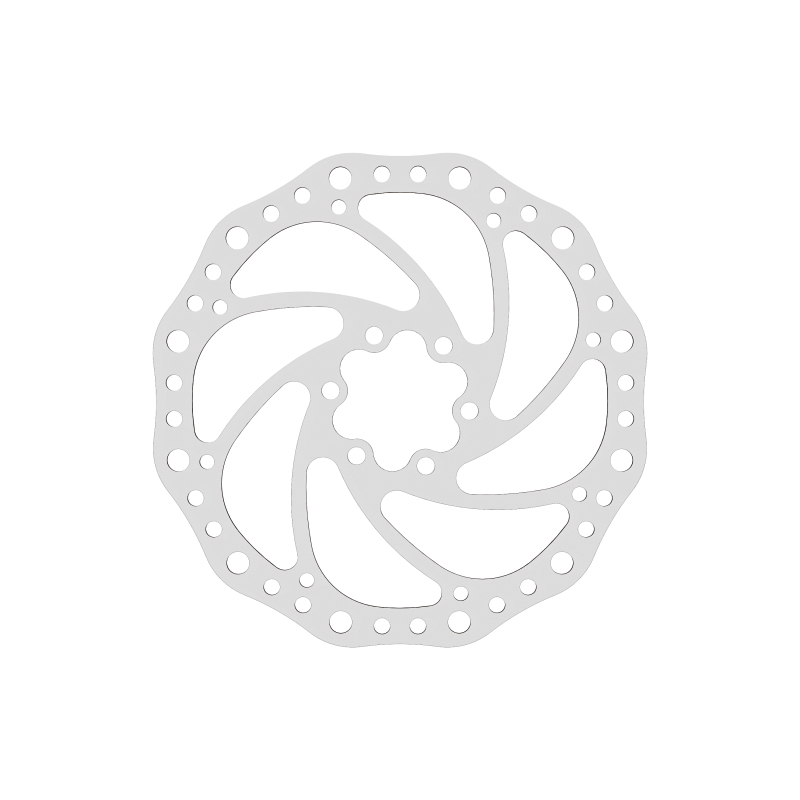
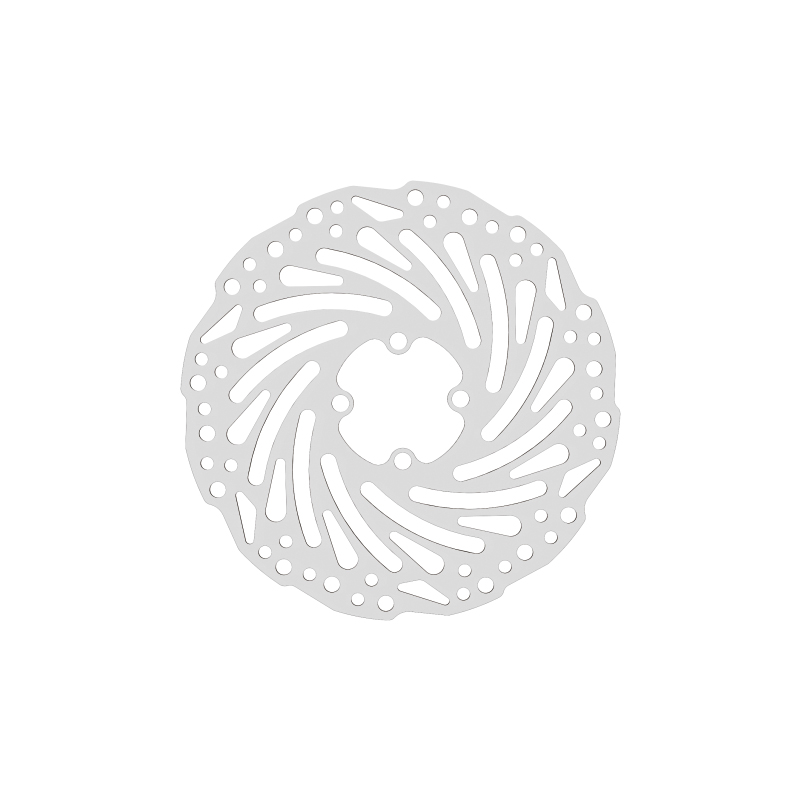
Ningbo Shenglu Bicycle Co., Ltd. designs and manufactures bicycle disc rotors under our Bike Disc Brake Rotor manufacturer program. The range covers center lock and 6-bolt rotors for road, mountain, e-bike, city, gravel and children's bicycles, and it is part of our wider Disc Brake product group. Because our factory in Ningbo, China, keeps stamping, CNC machining, heat treatment, surface treatment and final assembly in-house, we can control flatness, hardness and batch consistency from sample approval through series production.
As a component factory, we supply rotors to brands that need repeatable OEM or ODM output rather than one-off samples. Our engineering team evaluates each rotor configuration against material behavior, braking load, mounting interface and the hub standards used in the final wheel build. We use this information to prepare a proposal that matches the rotor to the actual bicycle application, not just to a generic part number.
Our Bike Disc Brake Rotor Range and Application Fit
We currently list eight rotor series under the Bike Disc Brake Rotor category. They differ in braking profile, carrier construction and mounting interface, which allows us to align the rotor with the riding intensity, frame type and caliper system used by the customer.
| Model |
Construction and mounting |
Typical application |
| RT610 |
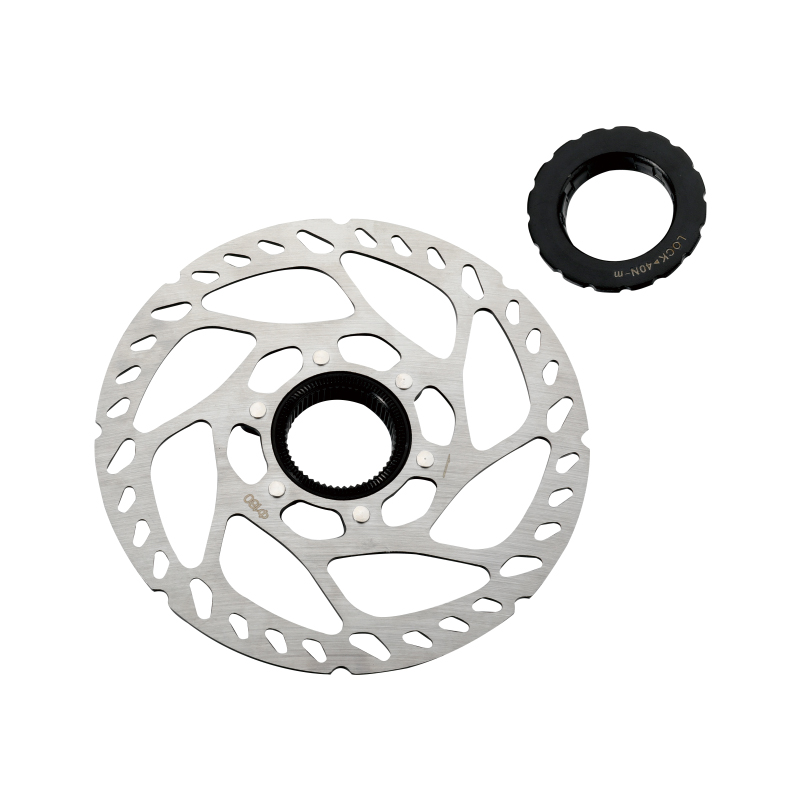
Center lock, 1.8 mm, stainless steel braking surface with aluminum alloy carrier, Φ160 |
Road and light e-bike builds where low rotating weight and lateral rigidity are priorities |
| RT600 |
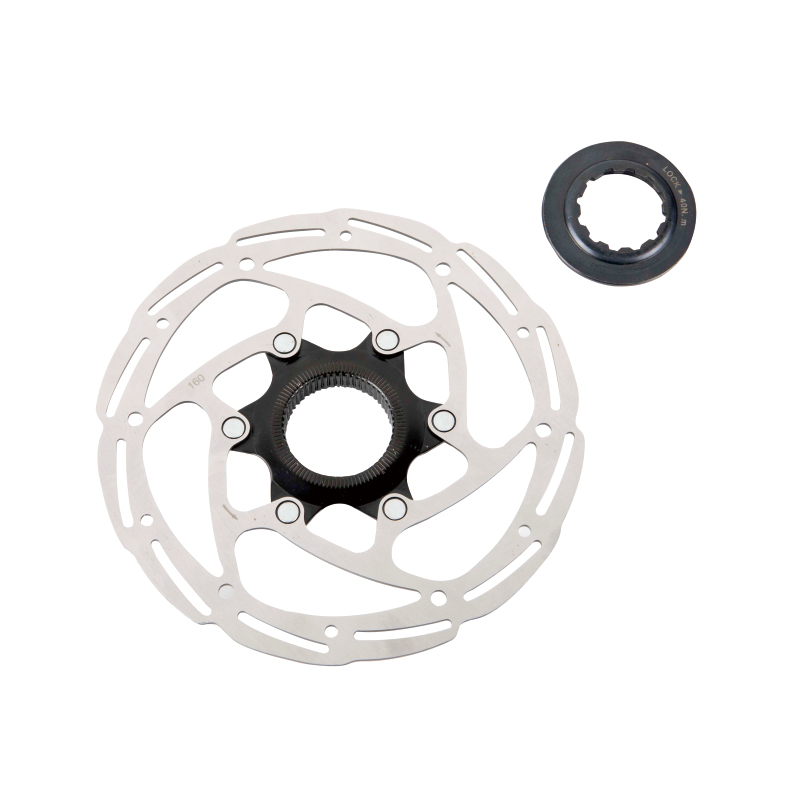
Center lock, 1.8 mm, stainless steel braking surface with steel/iron carrier, Φ160 |
Commuter, road and MTB upgrades needing balanced durability and easy service |
| RT520 |
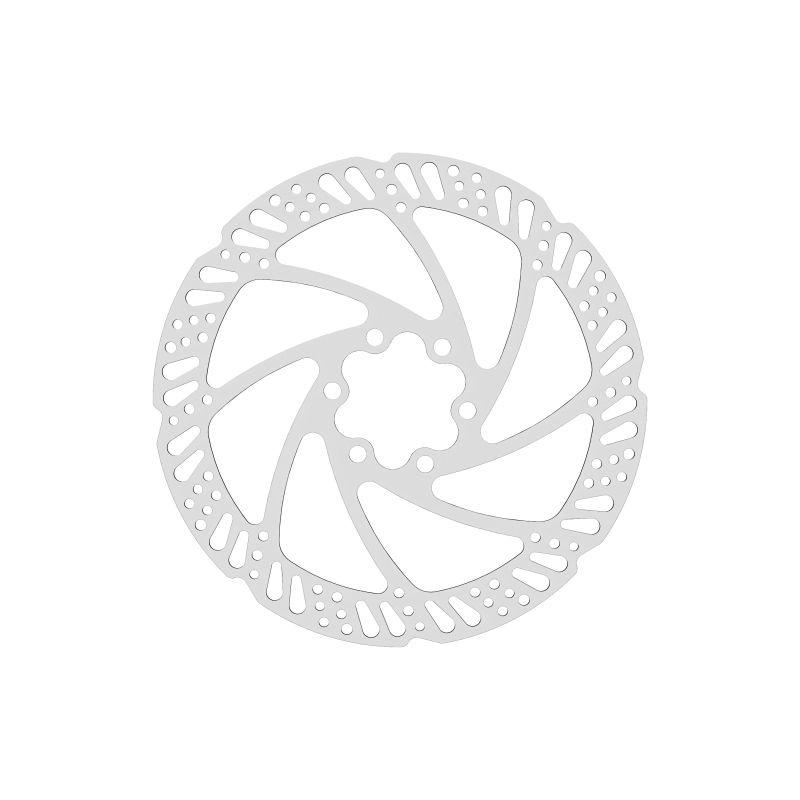
6-bolt, 1.8 mm, stainless steel with wide braking edge and dense cooling holes, Φ160 |
MTB and e-bike braking with sustained heat load |
| RT530 |
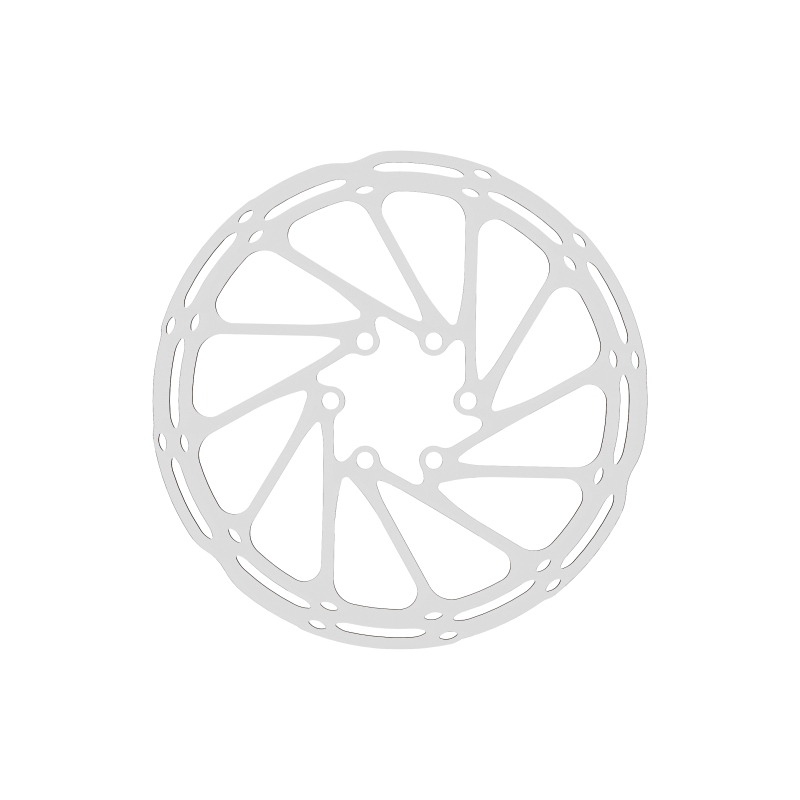
Center-line braking profile |
Road and gravel applications where an even braking surface is preferred |
| RT545 |
Stainless steel braking surface |
Road and urban OEM builds focused on corrosion resistance |
| RT500 |
Wave-shaped braking edge |
MTB and gravel use where debris shedding and lighter feel are valued |
| RT515 |
Long flat hole ventilation |
E-bike and heavy urban riding with frequent brake use |
| RT140 |
Compact children's rotor |
Kids' bikes and small-wheel bicycles |
The listed RT610, RT600 and RT520 models confirm the main specification directions we manufacture: 1.8 mm material thickness and Φ160 diameter, with center lock or 6-bolt mounting. For projects requiring different rotor diameters or thicknesses, send the working point and brake system details; our proposal will confirm the feasible configuration before tooling and sampling begin.
Engineering and Material Selection
The rotor has two material jobs: it must provide a stable friction surface against the pad and enough stiffness to avoid deformation under braking torque. That is why our range includes one-piece stainless steel rotors and composite rotors with a stainless steel braking surface on a carrier.
RT610 uses an aluminum alloy carrier with a stainless steel braking ring, which reduces unsprung weight and increases lateral rigidity. RT600 uses a steel/iron carrier for a balanced combination of stiffness, cost and durability. RT520 is a one-piece stainless steel rotor with a wide braking edge and dense cooling holes, which suits higher heat loads. The choice between these constructions depends on target weight, brake pad compatibility, riding terrain and the hub interface.
Critical Specifications We Confirm Before Quoting
- Rotor diameter and thickness relative to caliper reach and frame clearance
- Mounting type: center lock spline or 6-bolt pattern
- Braking surface material and carrier material
- Cooling hole or slot profile and its effect on pad sweep
- Hub model, axle standard and flange spacing for interface verification
- Required branding, packaging and batch traceability
Manufacturing and Quality Control
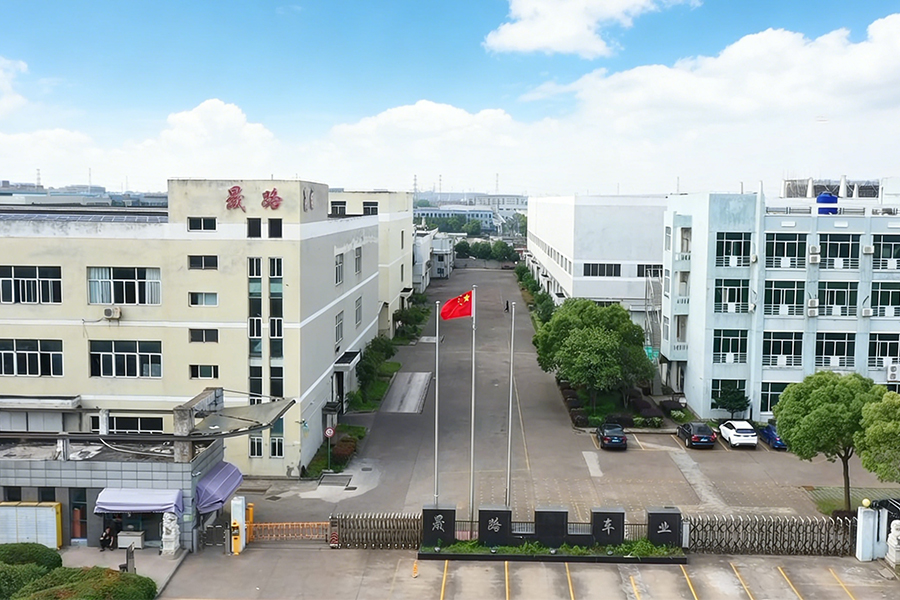
Our manufacturing base occupies 80,000 square meters and operates a complete in-house chain: punching, aluminum forging, CNC machining, cold forging, blackening and phosphating, aluminum oxidation, CP and ED plating, heat treatment and assembly. Automation has been implemented in punching, CNC machining, hub assembly and freewheel assembly, reducing manual variation in the same process families used for rotor blanking and finishing.
Quality is managed through process control rather than a single final inspection. Depending on the rotor program and application, verification includes dimensional and assembly accuracy, functional performance, structural load and durability evaluation, surface treatment consistency and corrosion resistance testing. We also review flatness and runout behavior as part of batch control, because these values directly affect brake feel and pad contact.
Configuration, OEM/ODM and Integration Support
Our OEM and ODM projects follow a defined path: manufacturing feasibility review, sample development aligned with mass production conditions, specification lock before scaling, and batch production with process consistency verification. This means the approved sample represents what we can repeat in series, not a laboratory prototype.
We support customization that can be controlled and scaled, including rotor profile adjustment, laser logo engraving, private label branding, packaging design and installation-related documentation. Because we also manufacture disc hubs and complete wheelsets, we can verify rotor/hub compatibility across center lock and 6-bolt programs and coordinate delivery with your wheel build schedule.
Information We Use to Configure Your Solution
Provide these details with your inquiry, and we will return a rotor configuration and quotation based on your specific build:
- Rotor diameter and thickness target
- Mounting interface: 6-bolt or center lock
- Hub model or axle standard, including thru axle or quick release
- Caliper type: Hydraulic Disc Brake or Mechanical Disc Brake
- Brake pad material if known
- Riding application: road, MTB, e-bike, gravel, city or kids
- Target annual quantity, packaging and marking requirements
- Reference drawing, sample or existing product code
Documentation, Acceptance and Service
Our proposal includes the rotor model, mounting type, material specification, surface treatment, packaging scope and sampling plan. Batch traceability and inspection checkpoints support consistent quality from sample confirmation through ongoing production. The standard warranty period is 2 years for quality issues caused by manufacturing or material defects under normal usage conditions.
For serviceability, center lock rotors use spline mounting with a lockring, while 6-bolt rotors use a six-bolt interface. We confirm the correct interface, torque expectations and replacement part compatibility in the technical documentation supplied with the order.
Frequently Asked Questions
What rotor sizes do you manufacture?
Our listed RT series currently includes RT610, RT600 and RT520 in 1.8 mm thickness and Φ160 diameter, plus RT530, RT545, RT500, RT515 and RT140 profiles. If your project needs a different diameter or thickness, we evaluate the target specification against our tooling and manufacturing process before quoting.
Can you supply OEM rotors with our brand logo?
Yes. We integrate laser logo engraving, private label branding and customized packaging into the production process so that branding remains consistent across large batches. These details are locked during sample approval and carried into mass production.
How do you ensure consistency between samples and mass production?
Our development path includes manufacturing feasibility review, sample development aligned with production conditions, specification lock and batch verification. Quality control covers raw material, processing, surface treatment, assembly and final inspection, with batch traceability throughout the process.
Do you match rotors with your own hubs?
Yes. We manufacture bike hubs and complete wheelsets, so we can verify rotor mounting compatibility with center lock or 6-bolt hubs and coordinate the complete package. Tell us the hub model, axle standard and rotor size in your inquiry.
What is your warranty for disc brake rotors?
The standard warranty period is 2 years, covering quality issues caused by manufacturing or material defects under normal usage conditions. We follow a defined process for problem confirmation, technical evaluation and correction or replacement according to liability attribution.



 English
 русский
 Français
 Español
 Português
 عربى