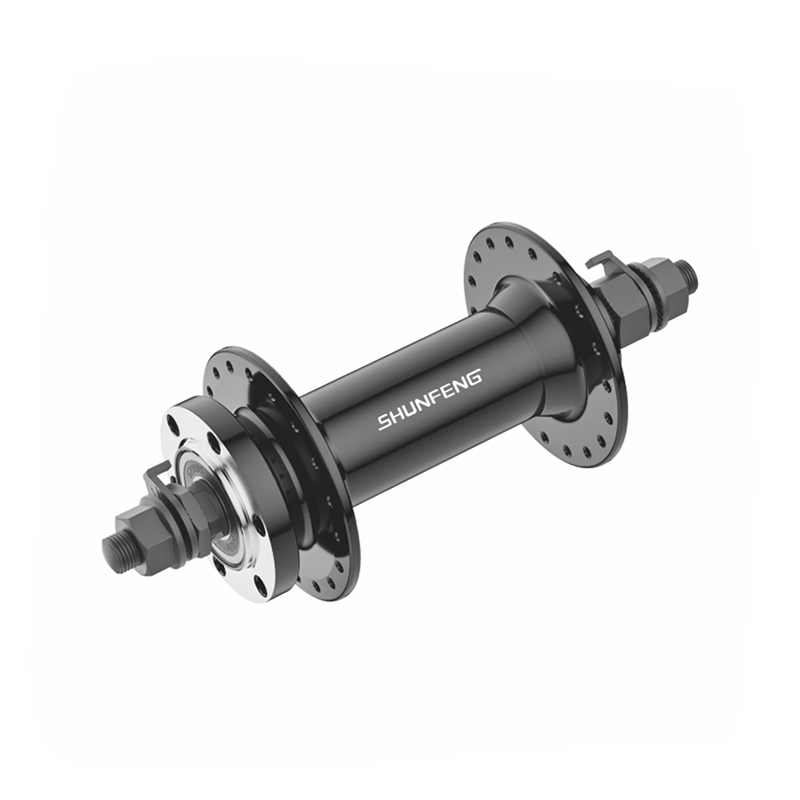
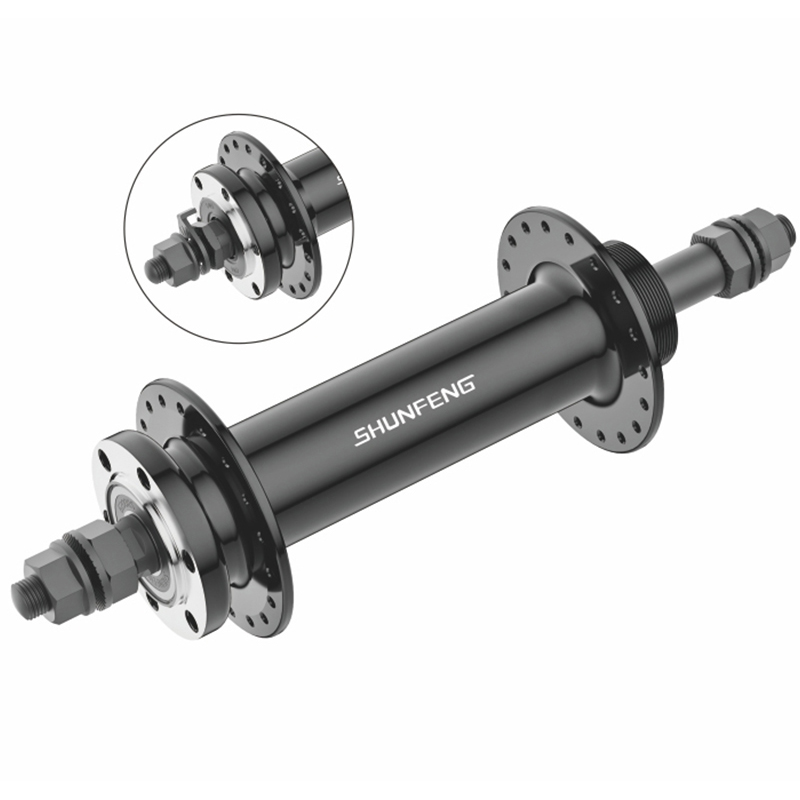
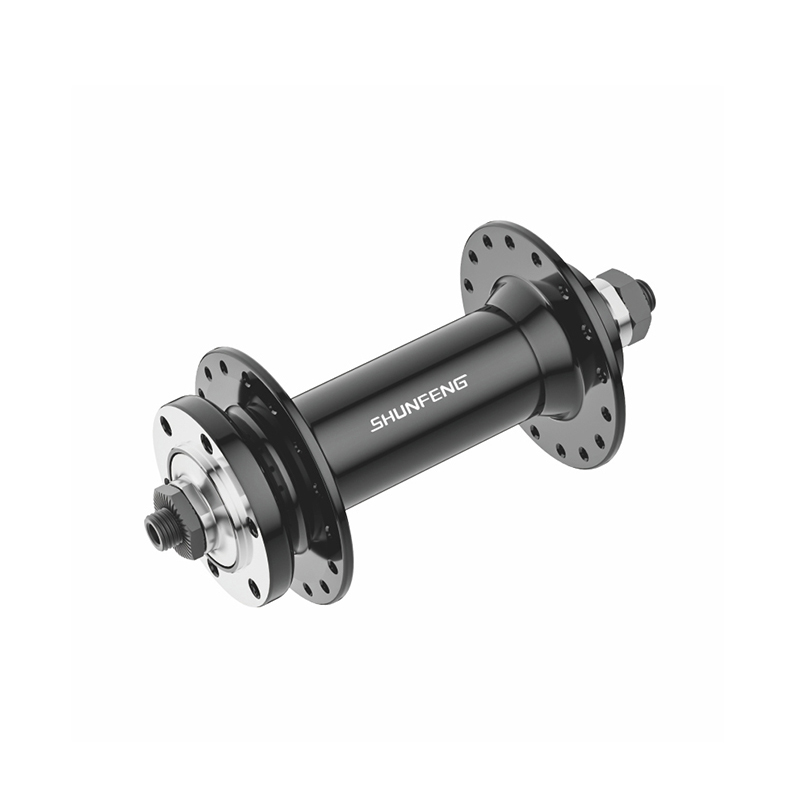
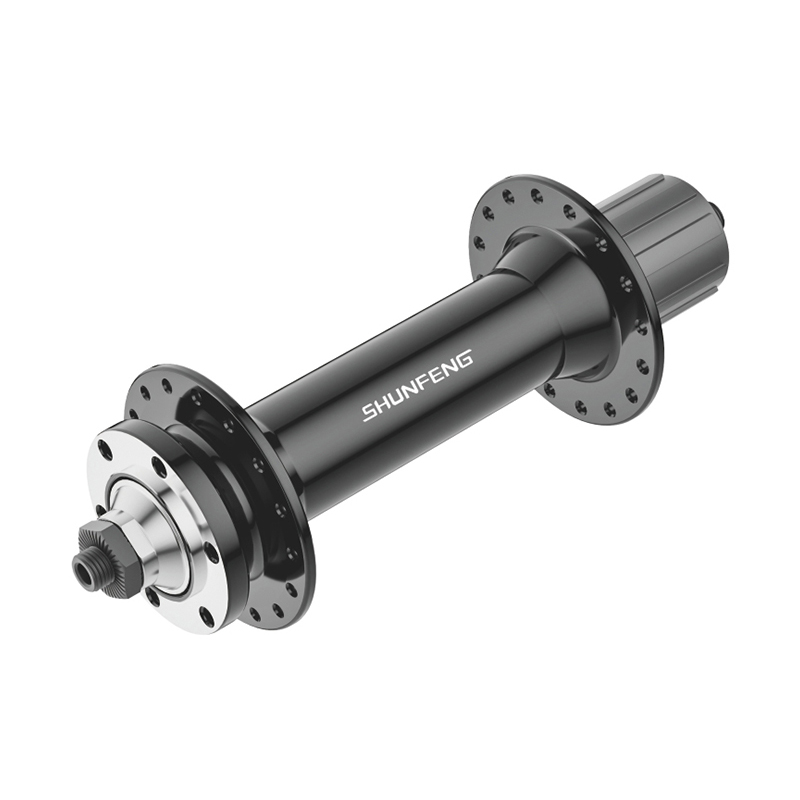
Fat Bike Hub Product Positioning and Core Structural System Analysis (Fat Bike Hub / Custom Fat Bike Hub Suppliers / Custom Fat Bike Hub Manufacturers)
The Fat Bike Hub, as a core wheel component designed specifically for fat tire bicycles, plays a critical role in power transmission and structural support within the entire cycling system. Due to the typical application scenarios of fat bikes covering snow, sand, mud, gravel roads, and low-temperature extreme environments, the performance requirements for hub structures are significantly higher than those of standard road or mountain bike hubs. Therefore, in design and manufacturing, material strength, sealing performance, corrosion resistance, and low-temperature stability become the core focus.
In the current international market, Custom Fat Bike Hub Suppliers and Custom Fat Bike Hub Manufacturers continue to promote product structural upgrades, driving Fat Bike Hub development toward higher rigidity, greater reliability, and longer service life. From a mainstream technical perspective, Fat bike hubs must maintain stable performance in extreme conditions such as low temperatures, slippery surfaces, and high-impact terrain. Especially under extreme cold and high-impact conditions, material selection and structural design directly determine riding safety and service life.
Fat Bike Hubs are typically made of high-carbon steel or reinforced alloy steel to ensure structural toughness and impact resistance in low-temperature environments. A large-diameter through-axle design has become mainstream, significantly improving overall rigidity and reducing axle deformation risk. In the bearing system, sealed cartridge bearings are widely used to prevent the intrusion of mud, water, and ice, ensuring long-term stable operation.
In flange structure design, wide flange spacing improves lateral wheel stiffness, allowing better stability in complex terrain. These design principles together form the core technical framework of modern Fat Bike Hub products and are key optimization directions for Custom Fat Bike Hub Manufacturers.
Fat Bike Hub Product Classification and Structural Technology Evolution Path
From a product classification perspective, Fat Bike Hubs can be categorized based on usage scenarios, structural forms, and manufacturing processes. Driven by different riding demands, Fat Bike Hubs have gradually formed a multi-tier product system that covers extreme environments, performance riding, and daily commuting applications.
In extreme environment applications, Fat Bike Hubs emphasize high-strength structures and extreme sealing performance. These products often adopt reinforced axle body structures combined with multi-layer sealing systems to ensure stable operation in low-temperature and high-humidity environments. Since snow and mud environments are highly corrosive to bearing systems, sealing capability has become a key quality indicator.
In terms of structural design, through-axle systems have become a mainstream solution among Custom Fat Bike Hub Suppliers. This structure improves force distribution across the axle, reducing localized stress concentration. Meanwhile, high-carbon steel and aluminum alloy hybrid structures are increasingly adopted to balance weight and strength requirements.
From a manufacturing perspective, Fat Bike Hub Manufacturing is moving toward precision machining. CNC technology is widely used in hub body shaping to ensure extremely tight dimensional tolerances and minimize vibration during high-speed rotation. Surface treatments such as anodizing and anti-corrosion coatings further enhance durability.
Functionally, Fat Bike Hubs can be divided into freewheel systems, cassette systems, and direct-drive systems. Each structure differs in transmission efficiency, maintenance convenience, and compatibility. Therefore, Custom Fat Bike Hub Manufacturers often develop multiple product lines to meet diverse market demands.
Overall, Fat Bike Hub is evolving from a single mechanical component into a system-integrated solution with higher compatibility and performance coordination with complete bicycle systems.
Intelligent Manufacturing and Automation System in Fat Bike Hub Factories
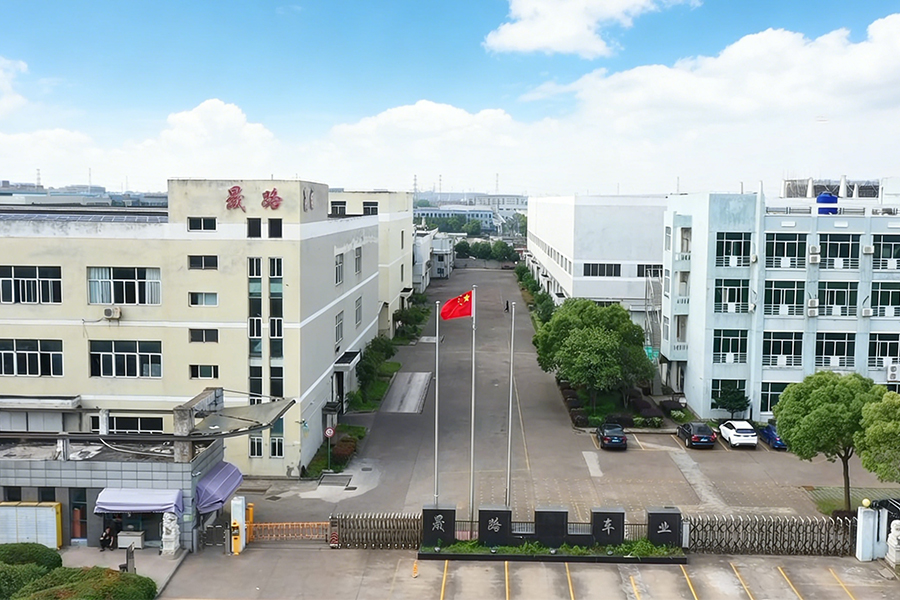
In modern Fat Bike Hub manufacturing systems, automation has become a key method to improve product consistency and production efficiency. Manufacturers and factories such as :contentReference[oaicite:0]{index=0} continuously advance structured and automated manufacturing processes, strengthening their competitiveness in the global supply chain as Custom Fat Bike Hub Manufacturers.
In production systems, automated mechanical processing and sheet metal processing are widely used in the initial manufacturing stage of components, enabling precise shaping of metal materials and reducing deviations caused by manual operations. CNC machining centers play a key role in hub body production, enabling high-precision machining of complex structures in a single process.
During assembly, automated systems gradually replace manual operations in bearing installation, axle alignment, and structural locking, ensuring standardized production control. In freewheel assembly, automated equipment ensures consistent execution of repetitive high-frequency tasks, improving batch uniformity.
Automated inspection systems are applied throughout production to monitor key dimensions, tolerance ranges, and rotational performance, enabling multi-dimensional quality verification before shipment. This ensures higher controllability for Custom Fat Bike Hub Suppliers.
High-carbon steel and alloy materials undergo strict pre-treatment processes before machining to ensure structural stability and prevent deformation. In surface treatment stages, automated coating systems enhance corrosion resistance in humid, cold, and high-salt environments.
Automation also extends to production management systems, where data collection and analysis optimize workflow and resource allocation. This enables Fat Bike Hub Manufacturers to maintain stable production capacity under fluctuating global demand.
FAQ
Q1: What is the difference between a Fat Bike Hub and a standard bicycle hub?
A Fat Bike Hub requires higher structural strength, sealing capability, and low-temperature resistance, often featuring wider flange spacing and larger axle diameters for extreme terrain conditions.
Q2: Why does a Fat Bike Hub require high-level sealing bearings?
Because fat bikes operate in snow, mud, and sand environments, high-level sealing prevents water and particles from entering the bearing system, reducing wear and extending service life.
Q3: What materials are commonly used by Custom Fat Bike Hub Manufacturers?
Main materials include high-carbon steel, reinforced alloy steel, and aluminum alloy composite structures to balance strength and weight.
Q4: How does automation affect Fat Bike Hub quality?
Automation improves machining precision and assembly consistency, reducing human error and ensuring stable performance in mass production.
Q5: How does a Fat Bike Hub maintain performance in extremely cold environments?
Through optimized material toughness, low-temperature lubrication systems, and multi-layer sealing structures, stable rotation and structural integrity are maintained under extreme cold conditions.



 English
  русский
  Français
  Español
  Português
  عربى
عربى