How Bike Disc Brake Rotor Determines Bicycle Braking Performance: OEM/ODM Bike Disc Brake Rotor Manufacturers and Manufacturing Capability Analysis
The bicycle braking system directly affects riding safety, handling stability, and overall user experience under different road conditions. As a key friction component of the entire disc brake system, the Bike Disc Brake Rotor plays a decisive role in braking force output, heat dissipation performance, wear resistance, and long-term operational stability. In recent years, with the continuous development of mountain bikes, road bikes, gravel bikes, electric bicycles, and urban commuting bicycles, the performance requirements for disc brake systems have significantly increased, which has driven OEM/ODM Bike Disc Brake Rotor Manufacturers to continuously improve manufacturing technology, automation level, and quality control systems.
A bicycle disc brake rotor, also known as a brake disc or rotor, is a metal circular disc mounted on the wheel hub. It works together with brake pads inside the caliper. When the rider pulls the brake lever, the hydraulic or mechanical system drives the caliper to clamp the rotating rotor, generating friction that reduces wheel speed and achieves braking or full stopping. Compared with traditional V-brake or C-brake systems, disc brakes are less affected by weather conditions and maintain stable braking performance in rain, mud, steep descents, and complex off-road environments. Therefore, they have become a standard configuration in modern mid-to-high-end bicycles.
For global brands, more procurement teams are seeking suppliers with complete manufacturing systems, stable delivery capability, and OEM/ODM customization services. Therefore, manufacturers must not only possess high-precision machining capabilities but also establish complete production chains and process control systems.
Structure, Manufacturing Process, and OEM/ODM Production System of Bike Disc Brake Rotor
Although the Bike Disc Brake Rotor appears to be a simple metal disc, each high-quality rotor requires dozens of manufacturing processes. Its machining accuracy directly determines braking feel and product lifespan.
Different bicycle applications require different rotor specifications. Common market sizes include 140mm, 160mm, 180mm, and 203mm. Road bicycles typically use 140mm or 160mm rotors focusing on weight reduction and responsiveness, while mountain bikes and electric bicycles often use 180mm or 203mm rotors to achieve higher braking torque and improved heat dissipation performance.
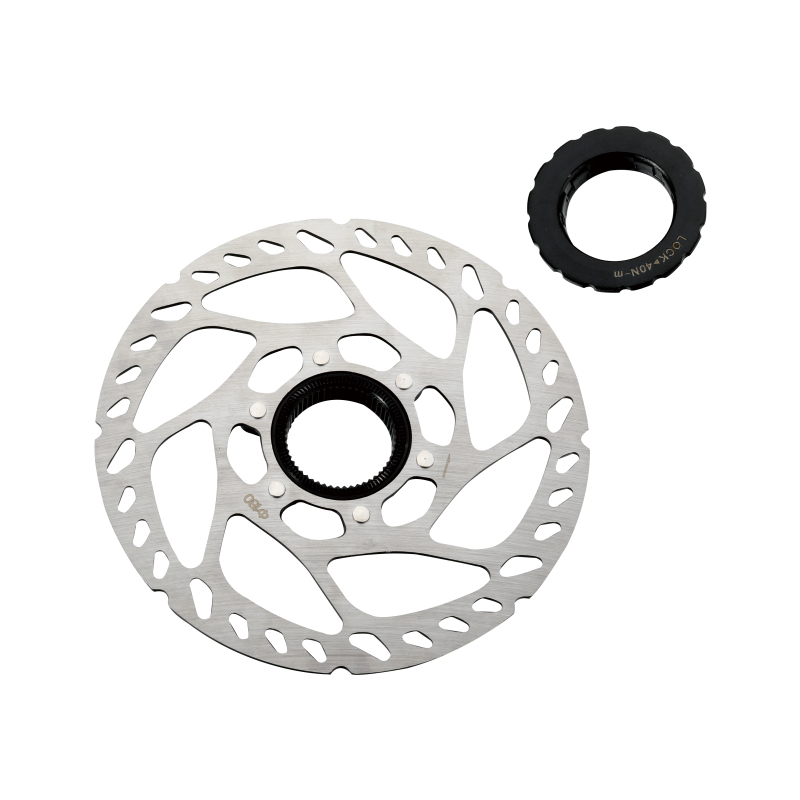
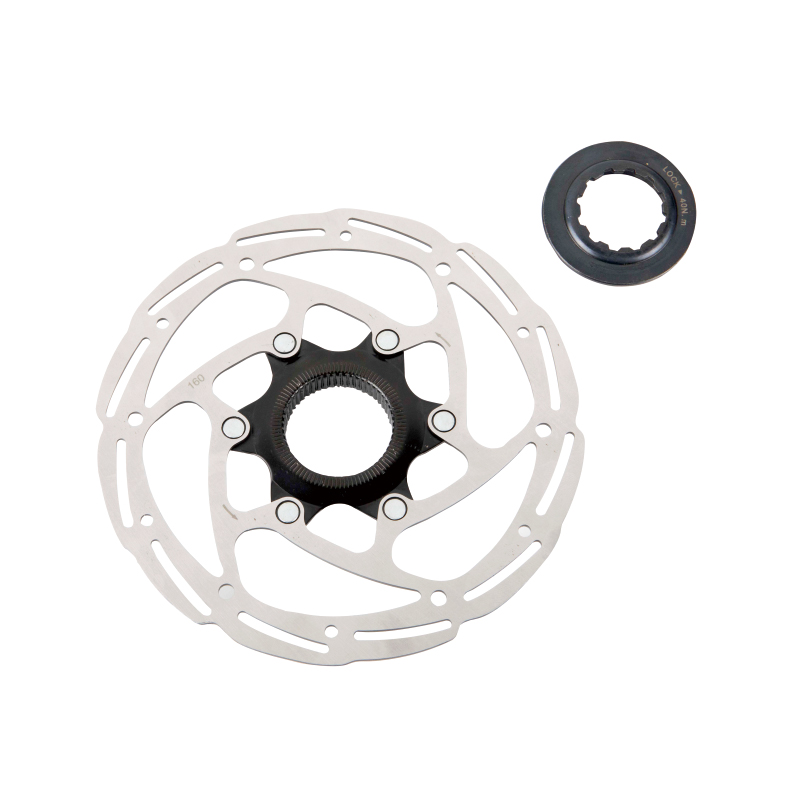
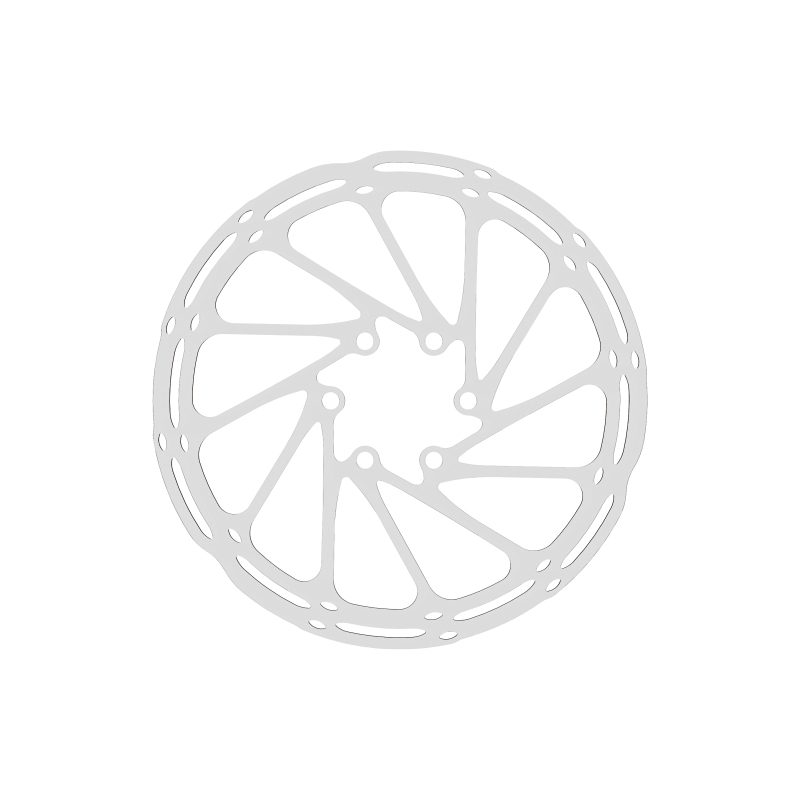
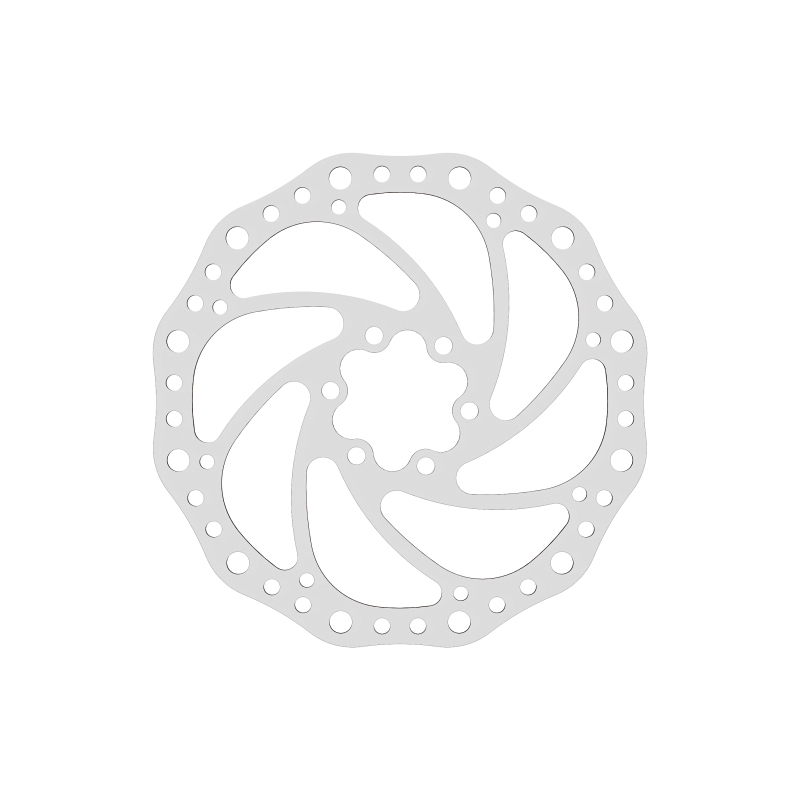
The disc brake rotor generally consists of braking surfaces, mounting areas, heat dissipation openings, reinforcement structures, center mounting holes, and either six-bolt or center lock interfaces. These structures influence compatibility as well as stress distribution during braking.
With increasing riding speed and performance demands, high-performance rotors are no longer focused solely on lightweight design but also thermal stability. During continuous braking, rotor temperatures can exceed 300°C. If material stability is insufficient, thermal fading, deformation, or vibration may occur.
Therefore, OEM/ODM Bike Disc Brake Rotor Manufacturers typically rely on integrated production processes including raw material selection, laser cutting, stamping forming, CNC machining, heat treatment, surface treatment, dynamic balancing, inspection, and assembly verification. Each stage is strictly controlled to ensure batch consistency.
| Manufacturing Process |
Impact on Bike Disc Brake Rotor Performance |
| Raw material selection |
Determines wear resistance, heat resistance, and mechanical strength |
| Laser cutting |
Ensures precise rotor shape and ventilation hole accuracy |
| Stamping forming |
Controls flatness and stress distribution |
| CNC machining |
Improves mounting hole precision and key dimensional accuracy |
| Heat treatment |
Enhances hardness, fatigue resistance, and durability |
| Surface treatment |
Improves corrosion resistance and surface quality |
| Dynamic balancing |
Reduces vibration at high-speed rotation |
| Flatness inspection |
Ensures uniform braking force output |
| Final assembly inspection |
Guarantees installation compatibility and consistency |
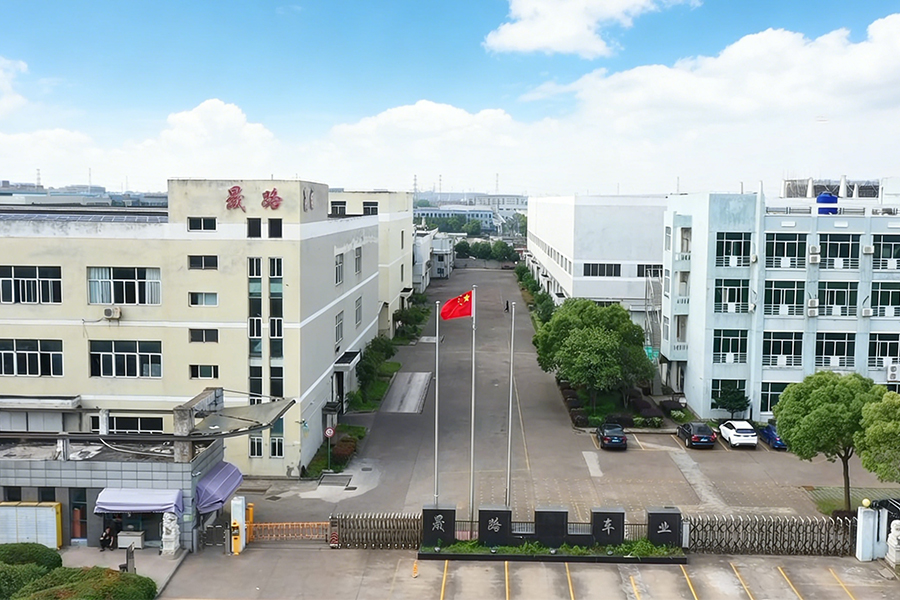
Ningbo Shenglu Bicycle Co., Ltd. is a professional manufacturing enterprise located in Ningbo City, Zhejiang Province, China. Founded in 1998, the company covers an area of 80,000 square meters. Over more than two decades of development, it has established a complete bicycle component production system and supporting facilities.
The company adheres to the business philosophy of people-oriented development and provides customers with high-quality products and competitive pricing. Its annual production capacity reaches 15 million pairs of steel hubs and 5 million freewheel units. The brand “SHUNFENG” has gained strong recognition in the bicycle industry.
The company has built a complete in-house production chain including punching, aluminum forging, CNC machining, cold forging, blackening, phosphating, aluminum oxidation, CP and ED plating, heat treatment, and final assembly. This integrated manufacturing system allows stronger process control and improved consistency for OEM projects, including disc brake rotor production support and related bicycle components.
Supplier Capability, Consistency Control, and Global OEM/ODM Customization of Bike Disc Brake Rotor
With increasing global demand for high-performance bicycles, competition among Bike Disc Brake Rotor suppliers has shifted from price-based competition to manufacturing capability and process control capability.
Competitive suppliers are not only capable of producing according to drawings but also actively participate in product development, including material optimization, structural optimization, tooling development, and mass production validation.
During the development stage, simulation analysis is used to evaluate stress distribution, thermal expansion, and stiffness variation of different rotor designs. After simulation, prototypes are manufactured for testing and optimization until performance targets are achieved.
Consistency is more important than single-unit performance in mass production. When a brand purchases hundreds of thousands of rotors annually, any inconsistency in hardness, flatness, or material structure may cause braking feel differences across batches.
Therefore, manufacturers implement statistical process control systems to monitor key parameters such as material thickness tolerance, deformation after stamping, heat treatment hardness, flatness, runout, concentricity, dynamic balance, and surface roughness.
Modern OEM/ODM Bike Disc Brake Rotor Manufacturers also adopt flexible production systems that allow fast switching between different rotor sizes, thicknesses, mounting systems, and customized branding requirements.
Ningbo Shenglu Bicycle Co., Ltd. continues to strengthen its manufacturing capability under the concept of Manufacturing Bicycle Components, Built on Process Control. With decades of experience, the company has built strong production capacity and stable quality systems, supporting global OEM and ODM cooperation projects.
The company’s large-scale production capability is supported by continuous improvement in automation and process optimization. This ensures stable product quality while also meeting customized requirements from international clients.
In modern bicycle manufacturing supply chains, suppliers are evaluated not only on delivery capability but also on long-term development capability, engineering support capability, and system integration capability. A mature supplier is expected to support product upgrades, cost optimization, quality improvement, and new product development continuously.
OEM/ODM Bike Disc Brake Rotor Manufacturers and Global Bicycle Component Manufacturing Upgrade
In recent years, the global bicycle industry has moved toward higher performance, higher quality, and greater consistency. This trend has driven continuous improvements in Bike Disc Brake Rotor design and manufacturing systems.
Modern market requirements focus on full product lifecycle performance, starting from design stage considerations such as weight, stiffness, heat dissipation, noise control, corrosion resistance, and maintenance convenience.
Some high-end rotor designs adopt floating structures combining aluminum alloy carriers with stainless steel braking rings. This improves heat dissipation while reducing weight and minimizing deformation caused by thermal expansion. Standard one-piece stainless steel rotors still dominate many entry-level and mid-range markets due to cost efficiency and durability.
OEM/ODM manufacturers provide customization services such as laser logo engraving, packaging design, color surface treatment, installation kits, and traceability coding systems to meet brand identity requirements.
Environmental manufacturing requirements are also becoming increasingly important. Modern factories emphasize energy-efficient equipment, wastewater recycling systems, eco-friendly surface treatment processes, and sustainable production systems.
Digital manufacturing systems are widely adopted, including MES production execution systems, ERP order management systems, automated warehousing systems, barcode traceability systems, and intelligent quality monitoring platforms.
Ningbo Shenglu Bicycle Co., Ltd. continues to improve its integrated manufacturing capabilities, including stamping, forging, CNC machining, cold forging, heat treatment, surface finishing, and assembly processes. Through full-process control, the company ensures stable quality and provides OEM/ODM manufacturing services for global bicycle components, including Bike Disc Brake Rotor products with diversified specifications and performance levels.



 English
  русский
  Français
  Español
  Português
  عربى
عربى