Thru Axle Technology Analysis: How Custom Thru Axle Suppliers Improve Bicycle Wheelset Performance Through Manufacturing Processes
Modern bicycles continue to evolve toward lighter weight, higher strength, and improved safety, and wheel retention systems have undergone significant upgrades as well. The Thru Axle has gradually become a standard component for mountain bikes, road bikes, gravel bikes, and electric bicycles. Compared with traditional quick-release skewers, it provides greater wheel stiffness, enhanced frame rigidity, and more precise braking performance, making it increasingly popular among complete bicycle brands and global component buyers.
For international purchasers, selecting professional Custom Thru Axle Suppliers means more than purchasing a standard component. It also means gaining access to stable dimensional accuracy, advanced manufacturing technologies, and comprehensive OEM/ODM production capabilities. As the global bicycle industry continues to advance, the manufacturing strength of suppliers and factories has become one of the most important factors affecting overall product quality.
Why Thru Axle Has Become the Standard Configuration for Modern Bicycles
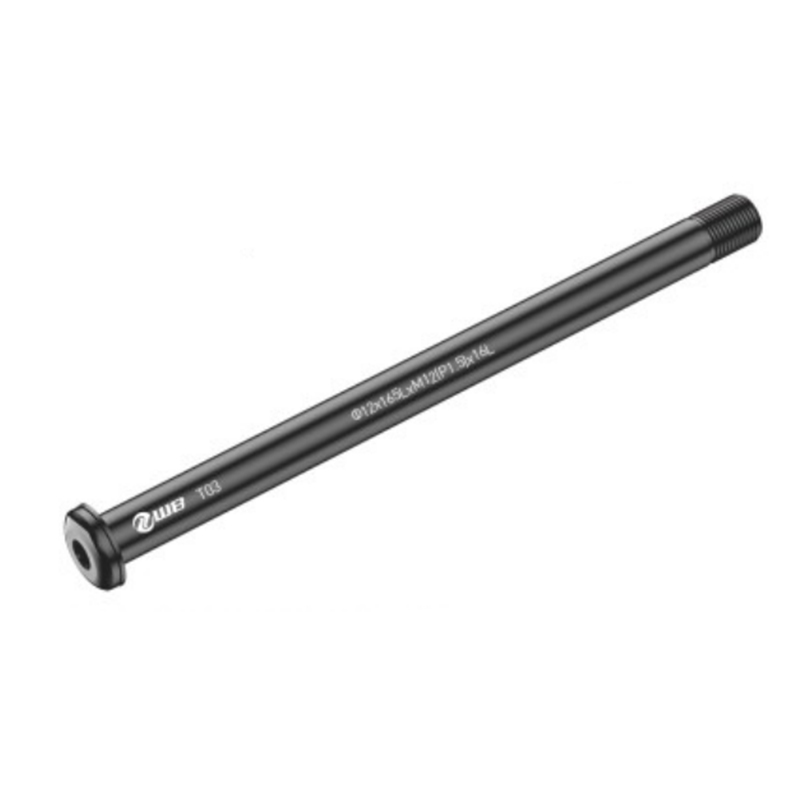
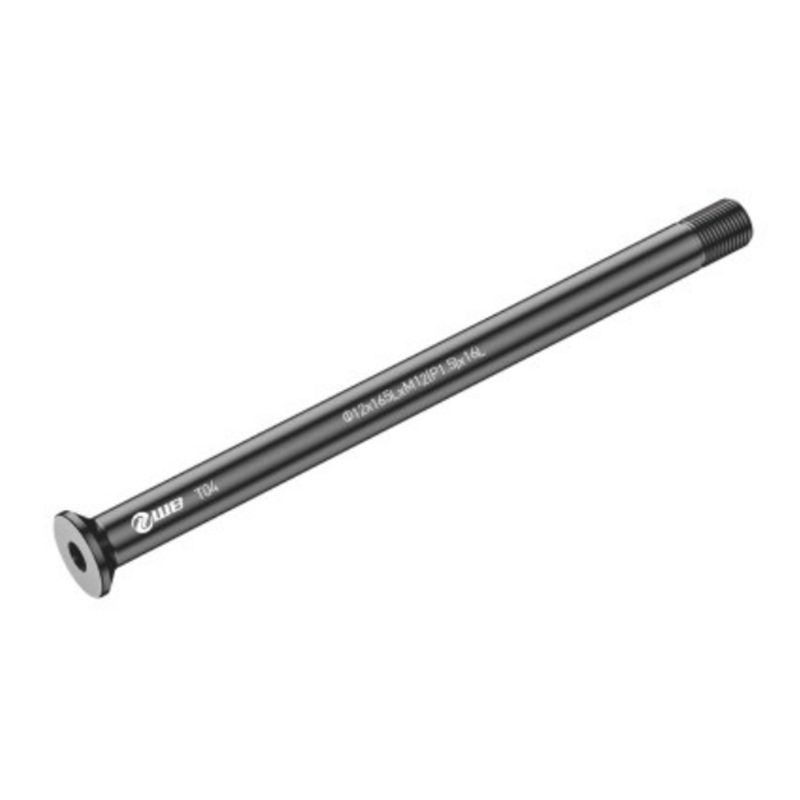
A Thru Axle secures the wheel by passing through the front fork or rear dropout and the hub axle before being tightened with threaded engagement. Unlike traditional quick-release systems, it eliminates the cam-operated skewer and instead uses a solid axle body that creates a stronger structural connection.
The most common specification available today is the 12 mm diameter thru axle, which is widely used on both front and rear wheelsets of modern road bicycles equipped with disc brake systems. Meanwhile, 15 mm versions are commonly found on mountain bike front wheels, while 20 mm models are mainly used for downhill and extreme off-road riding.
Modern disc brake systems require extremely accurate wheel positioning. When braking forces are continuously applied to the rotor, even slight wheel movement may result in rotor rub, abnormal noise, or reduced braking efficiency. A Thru Axle maintains precise alignment between the hub and the frame, ensuring that the brake rotor remains in the optimal working position.
During high-speed descents, aggressive cornering, and continuous riding on rough gravel or rocky terrain, the wheelset experiences complex multidirectional loads. A Thru Axle effectively minimizes lateral wheel flex while significantly improving overall riding stability, which is one of the primary reasons why many premium bicycle manufacturers have fully adopted this technology.
Besides improving riding performance, the Thru Axle also offers excellent repeatable positioning after wheel removal and installation. Every time the wheel is reinstalled, it returns to nearly the same position, which is particularly valuable for bicycles equipped with disc brakes.
How Custom Thru Axle Suppliers Ensure Product Quality Through Advanced Manufacturing
For global OEM customers, selecting professional Custom Thru Axle Suppliers involves much more than evaluating the appearance of the product. Buyers pay close attention to manufacturing consistency, production stability, and quality control throughout the entire production process.
Although a Thru Axle is relatively small, its manufacturing requires careful control of raw materials, dimensional precision, heat treatment, thread machining, and surface finishing. Every production step directly influences the final product's performance.
Different bicycle models require different axle lengths, thread pitches, shoulder dimensions, and locking mechanisms. As a result, many bicycle brands prefer customized production rather than purchasing standard products, encouraging more manufacturers to provide comprehensive custom Thru Axle solutions.
| Manufacturing Process |
Purpose |
Performance Benefit |
| Raw Material Selection |
High-strength alloy steel or aluminum alloy |
Improves tensile strength and fatigue resistance |
| Cold Forging or Forging |
Optimizes metal grain flow |
Enhances overall structural strength |
| Precision CNC Machining |
Ensures dimensional and thread accuracy |
Provides consistent installation performance |
| Heat Treatment |
Improves hardness and toughness |
Prevents long-term deformation |
| Anodizing or Electroplating |
Enhances corrosion resistance |
Extends service life |
| Dimensional Inspection |
Controls production tolerances |
Ensures compatibility across different bicycle models |
Today's international buyers increasingly focus on manufacturing process control instead of relying solely on final product inspection. Only when every production stage remains consistent can batch products maintain stable quality.
Professional manufacturers typically establish comprehensive production standards that carefully control forging temperatures, machining dimensions, heat treatment cycles, and assembly torque, ensuring that every Thru Axle meets strict engineering requirements.
Manufacturing Capability Determines the Competitiveness of Thru Axle Products
For international buyers, an outstanding manufacturer requires not only advanced production equipment but also a complete manufacturing system.
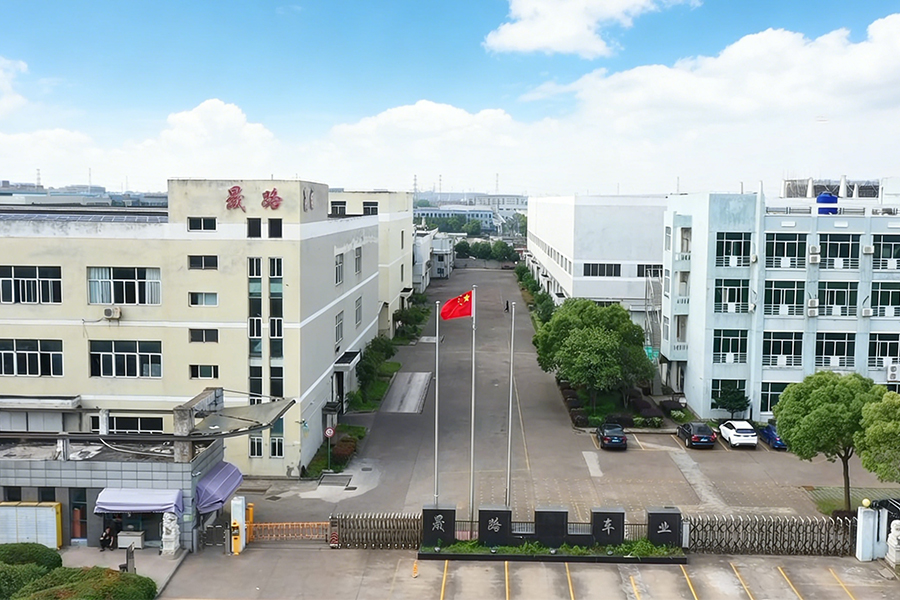
Ningbo Shenglu Bicycle Co., Ltd. is located in Ningbo, Zhejiang Province, China. Established in 1998, the company occupies an area of 80,000 square meters. After more than two decades of continuous development, it has become a professional bicycle component manufacturer with a complete production chain and supporting facilities. The company adheres to the corporate culture of "People-oriented, Unity and Progress" and is committed to providing customers with high-quality products at competitive prices.
The company currently produces 15 million pairs of steel hubs and 5 million freewheels annually. Its core brand, SHUNFENG, has earned an excellent reputation within the bicycle industry. In addition to its mature product portfolio, the company continuously strengthens its manufacturing capabilities and optimizes production processes to ensure stable product quality.
For Thru Axle manufacturing, product quality is determined not only by final assembly but also by the coordination and control of every manufacturing process throughout the production chain.
Ningbo Shenglu Bicycle Co., Ltd. has established a complete in-house manufacturing system covering stamping, aluminum forging, CNC machining, cold forging, blackening and phosphating, aluminum anodizing, CP plating, ED coating, heat treatment, and final assembly. This integrated production chain enables the company to maintain consistent manufacturing quality and process control.
A complete production system provides several significant advantages.
First, in-house manufacturing minimizes outsourcing, reducing transportation-related dimensional deviations and improving product consistency.
Second, internal machining capabilities allow rapid customization according to customer requirements, including axle length, thread specifications, and locking structures.
Third, an integrated quality management system supervises every stage from raw material inspection to machining, heat treatment, surface finishing, and final assembly, effectively reducing defects in mass production.
Because of these comprehensive manufacturing capabilities, more international bicycle brands cooperate directly with professional factories for OEM and ODM projects, allowing manufacturers to participate in product development from the earliest design stage while maintaining strict quality control.
For Custom Thru Axle Suppliers, manufacturing capability has become one of the most important competitive advantages.
Different countries and bicycle brands utilize various frame standards, including Boost, Non-Boost, and proprietary specifications. This diversity requires manufacturers to possess strong engineering expertise and flexible production capabilities.
Modern CNC machining centers achieve micron-level dimensional accuracy, ensuring highly consistent axle diameters, thread precision, and shoulder dimensions so that every Thru Axle can be installed smoothly while maintaining optimal fit.
Heat treatment also directly determines the long-term fatigue life of a Thru Axle. Proper quenching and tempering processes provide both excellent hardness and sufficient toughness, reducing the possibility of brittle failure during extended service.
Surface finishing is equally important.
Anodizing significantly improves the corrosion resistance of aluminum alloy products while providing various color options. Black oxide treatment is commonly applied to steel products to reduce oxidation. Electrophoretic coating and electroplating further enhance weather resistance, allowing products to perform reliably in humid and high-salt environments.
As the global cycling market continues to expand, bicycles are being used in increasingly diverse applications. From urban commuting and road racing to gravel adventures and mountain exploration, different riding disciplines demand different Thru Axle performance characteristics.
Road bicycles generally emphasize lightweight construction, leading manufacturers to adopt high-strength aluminum alloys. Mountain bicycles place greater importance on impact resistance and fatigue durability, making high-strength alloy steel and hollow lightweight designs increasingly popular.
Many bicycle brands now require customized features such as laser-engraved logos, colored anodized finishes, concealed locking mechanisms, anti-theft designs, and ultra-lightweight structures. These requirements demand comprehensive OEM development capabilities from manufacturers.
For professional factories, every production stage—from engineering drawings and prototype development to mass production—must be carefully managed to maintain manufacturing consistency and product quality.
International buyers also place increasing emphasis on supply chain stability when selecting Custom Thru Axle Suppliers.
A qualified factory should possess advanced manufacturing equipment, reliable raw material sourcing, mature quality management systems, and stable delivery capabilities. Only a complete and reliable supply chain can consistently support long-term production programs.
Meanwhile, automated production equipment continues to improve manufacturing efficiency. Modern CNC machining centers can complete turning, drilling, threading, and finishing operations in a continuous workflow, greatly reducing human error while improving consistency across large production batches.
Intelligent inspection systems are also becoming increasingly common throughout Thru Axle manufacturing, enabling real-time dimensional measurement, thread inspection, hardness testing, and comprehensive quality monitoring throughout the entire production process.
Future bicycle products will continue to demand lighter weight, higher precision, and longer durability. Accordingly, Thru Axle manufacturing standards will continue to evolve toward even greater levels of quality. More professional manufacturers and factories are investing in digital manufacturing technologies by integrating automated machining, online inspection, production traceability, and intelligent warehousing into complete manufacturing systems, providing global bicycle brands with increasingly stable and high-quality OEM and ODM solutions.
FAQ
Q1: What is the biggest difference between a Thru Axle and a Quick Release?
A Thru Axle uses a solid axle secured directly into threaded frame interfaces, providing significantly greater stiffness and more accurate wheel positioning than a traditional quick-release skewer, making it the preferred choice for modern disc brake bicycles.
Q2: What are the most common Thru Axle specifications?
The most common specification is the 12 mm diameter used on road bicycles and many rear mountain bike applications. Fifteen-millimeter versions are typically used on mountain bike front wheels, while 20 mm axles are mainly designed for downhill and aggressive off-road riding.
Q3: Why do many bicycle brands choose Custom Thru Axle Suppliers?
Different bicycle frames, forks, and hub systems require different axle lengths, thread standards, materials, colors, and branding. Custom suppliers can provide OEM and ODM solutions that satisfy individual bicycle manufacturers' engineering requirements.
Q4: What capabilities should a professional Thru Axle manufacturer possess?
A professional manufacturer should offer a complete production chain that includes forging, CNC machining, heat treatment, surface finishing, assembly, and quality inspection while maintaining reliable production capacity and comprehensive quality management systems.
Q5: Which factors should buyers focus on when purchasing Thru Axle products?
Key considerations include material strength, dimensional tolerance, thread precision, heat treatment quality, corrosion resistance, fatigue life, manufacturing capability, and the supplier's ability to maintain consistent quality throughout large-scale production.



 English
  русский
  Français
  Español
  Português
  عربى
عربى