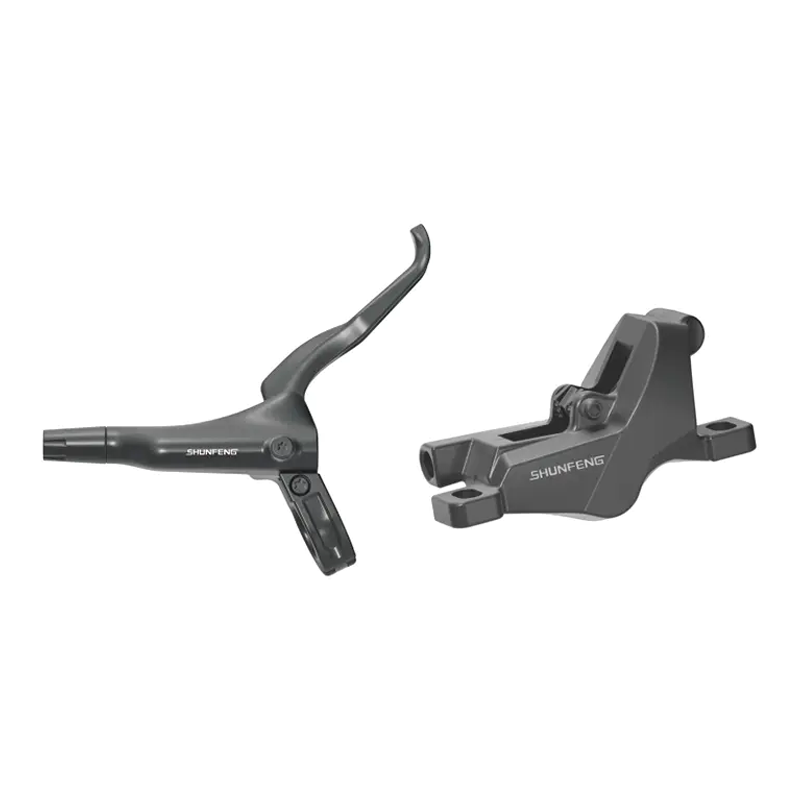
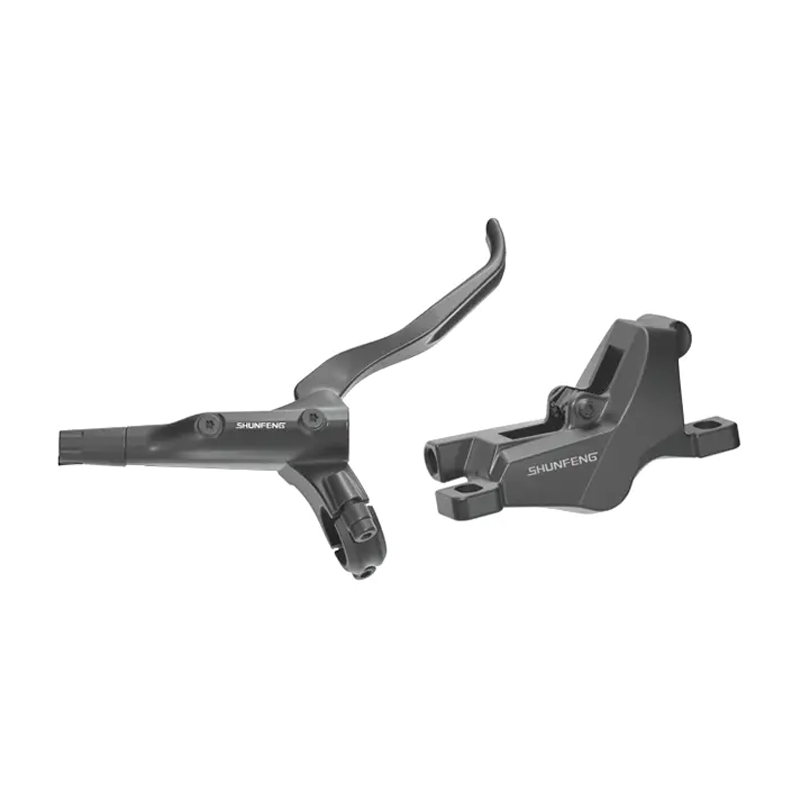
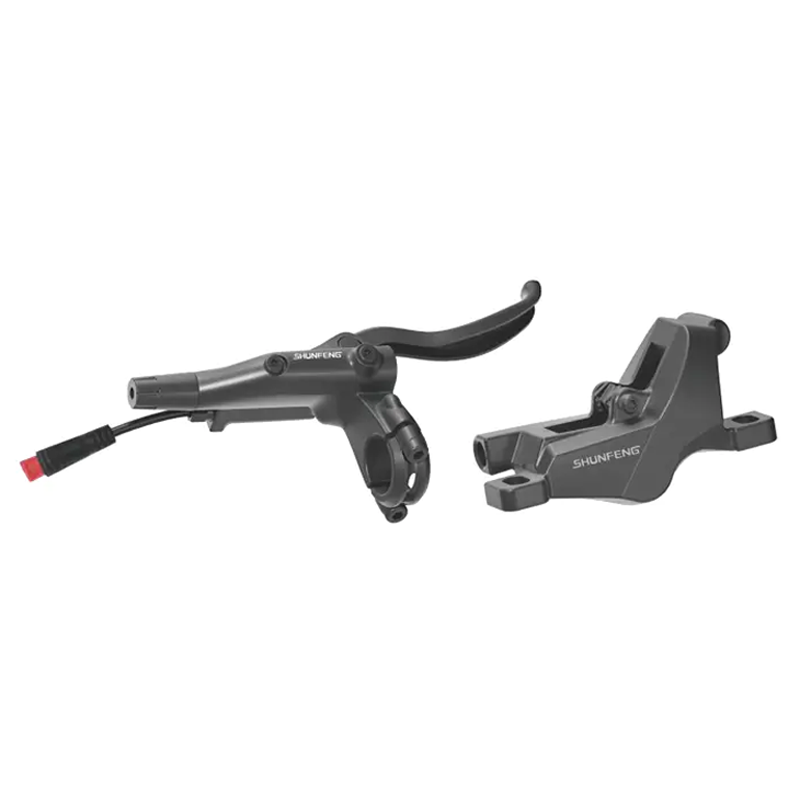
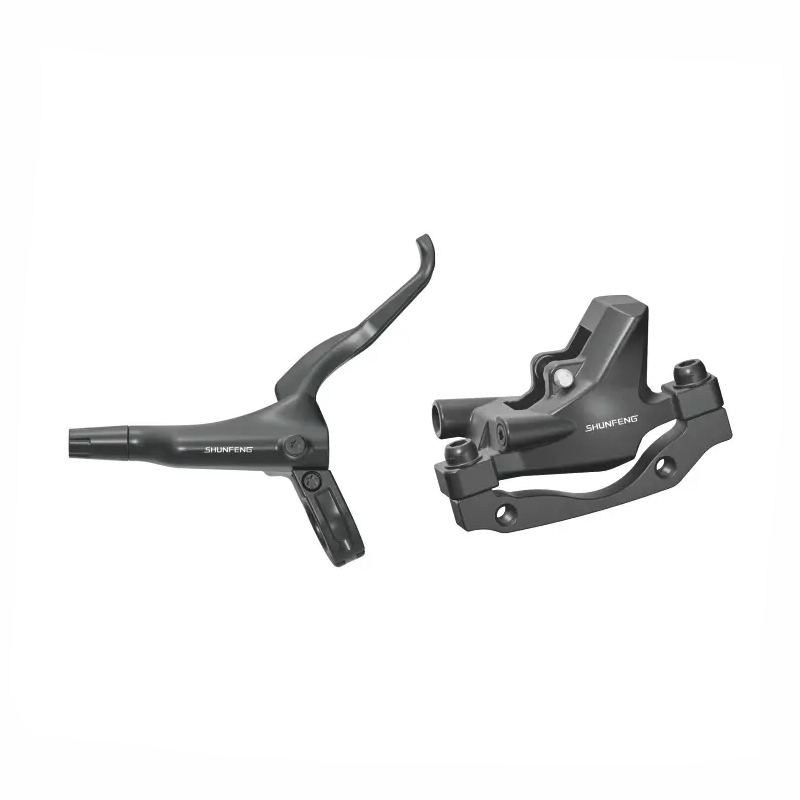
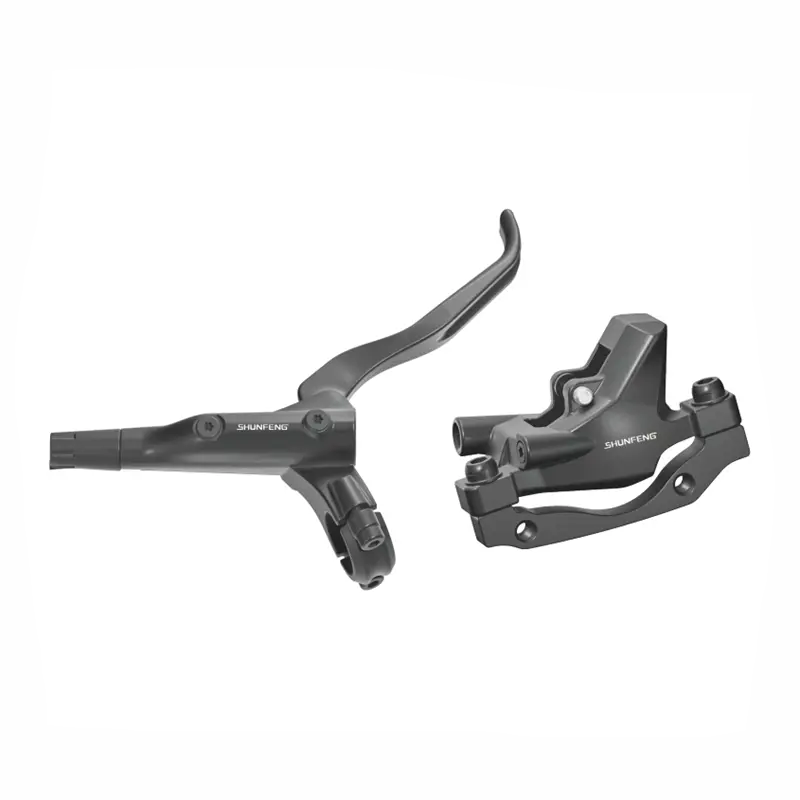
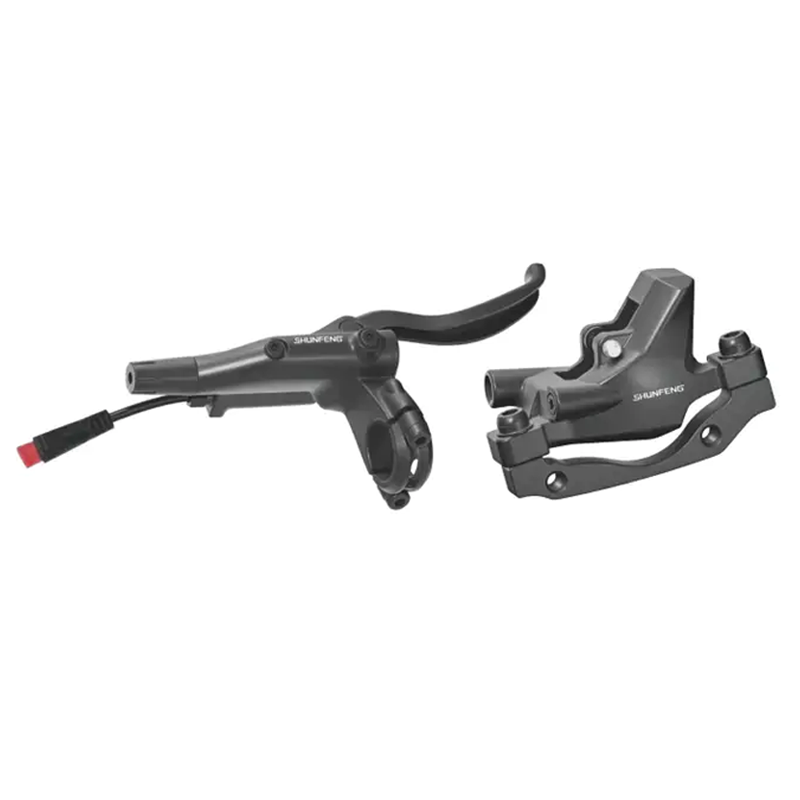
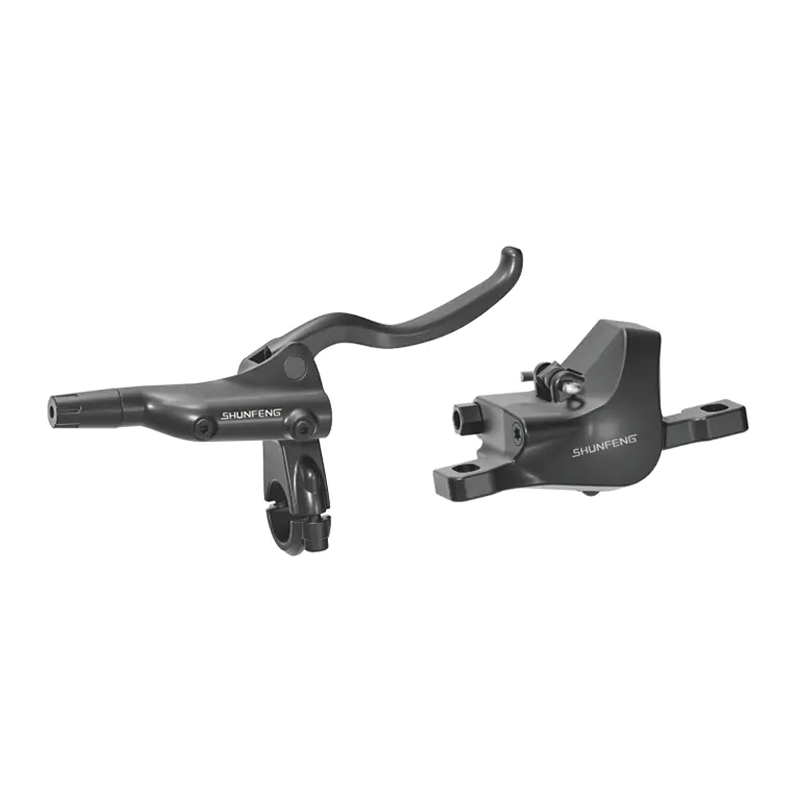
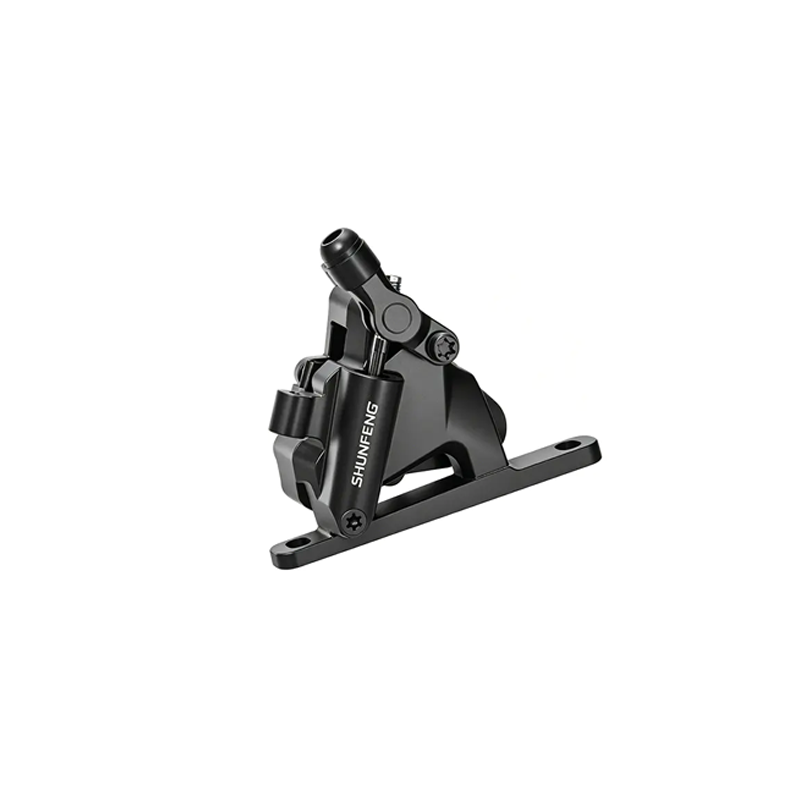
As a Hydraulic Disc Brake manufacturer we build complete brake systems for mountain, road, touring and e-bike programs. Our Ningbo, China factory controls machining, surface treatment and assembly in-house, so a custom brake specification can be developed, sampled and repeated in batch production with stable lever feel and sealing performance.
This range sits inside our Disc Brake family and covers two-piston and four-piston calipers, open and closed hydraulic systems, cable-pull hydraulic actuation, and e-bike power-off versions. It is built for OEM and ODM projects where braking curve, lever feedback and thermal stability have to be matched to a defined bicycle platform.
Hydraulic Disc Brake Range: What We Supply
Hydraulic brakes transmit lever force through incompressible fluid rather than cable tension. That gives smoother, more linear modulation and better resistance to contamination, which is why they are the standard on mid- and high-end bicycles. Our program includes eight model families, each positioned around caliper power, lever construction and e-bike function.
Four-Piston High-Power Models
DULA641 is our four-piston caliper brake for bike and e-bike use. LOLA342 adds an open oil-pressure system that compensates for thermal expansion, while EULA441 combines a four-piston caliper with a magnetic induction power-off function for e-bike motor cut-off.
These models are for trail, enduro, cargo and high-power e-bike platforms where continuous braking load and heat capacity are the main design drivers. See the DULA641 four-piston caliper hydraulic disc brake for a full model example.
Two-Piston Balanced Models
DULA601 and LOLA312 are two-piston designs with a lighter caliper package for bike and e-bike platforms. LOLA302 uses a die-casting handle seat for cost-efficient lever integration.
These fit XC, road, gravel, urban and light-trail builds where weight and simplicity matter more than maximum clamping force.
E-Bike Power-Off and Hybrid Actuation
EULA401 is a two-piston magnetic induction power-off brake for e-bikes. SL-R527 is a wire-pull oil-pressure brake that lets a mechanical cable actuate a hydraulic caliper, useful for frames that are not routed for hydraulic hose.
Matching Caliper Architecture to Application
Selecting the right model starts with the bike type, rider weight, rotor size and braking profile. The table below shows the available variants and where we normally place them.
| Model |
Caliper |
System |
Primary Fit |
| DULA641 |
Four-piston |
Hydraulic |
Bike and e-bike; demanding stopping power |
| LOLA342 |
Four-piston |
Open oil pressure |
Bike and e-bike; thermal stability on long descents |
| EULA441 |
Four-piston |
Magnetic power-off |
E-bike; four-piston braking and motor cut-off |
| DULA601 |
Two-piston |
Hydraulic |
Bike and e-bike; balanced weight and braking |
| LOLA312 |
Two-piston |
Split-type handle seat |
Bike and e-bike; modular lever installation |
| EULA401 |
Two-piston |
Magnetic power-off |
E-bike; compact lever and motor cut-off |
| LOLA302 |
Two-piston |
Die-casting handle seat |
Bike and e-bike; cost-efficient lever integration |
| SL-R527 |
Two-piston |
Cable-pull oil pressure |
Bike; frames with mechanical cable routing |
For road and gravel, two-piston brakes with lighter levers are usually the balance point. For enduro, e-bike and touring with heavier total weight, four-piston calipers provide more pad area and better heat management. Rotor size and pad material are then selected around the same working point.
Two-Piston vs Four-Piston: Engineering Trade-Offs
Four-piston calipers spread hydraulic force across a larger pad area. That raises maximum braking power and improves heat capacity during repeated braking, at some weight and packaging cost. Two-piston calipers are easier to modulate, lighter and often enough for road, XC and urban use.
Brake pad material follows the same logic: resin pads reduce noise and rotor wear for daily riding, while sintered metal pads resist high temperature and keep performance on long descents. We match pad compound to the application rather than applying one default across the range.
E-Bike Hydraulic Brake Integration
E-bikes add a motor drive that must be interrupted when the rider brakes. Our EULA series integrates a magnetic induction power-off switch in the brake system, supporting this function in both two-piston and four-piston layouts.
When configuring an e-bike brake, we need the motor and controller type, operating voltage and the housing position for the power-off connector. This keeps the brake lever reach, cable routing and connector specification aligned with the bicycle electrical system.
In-House Manufacturing and Quality Control
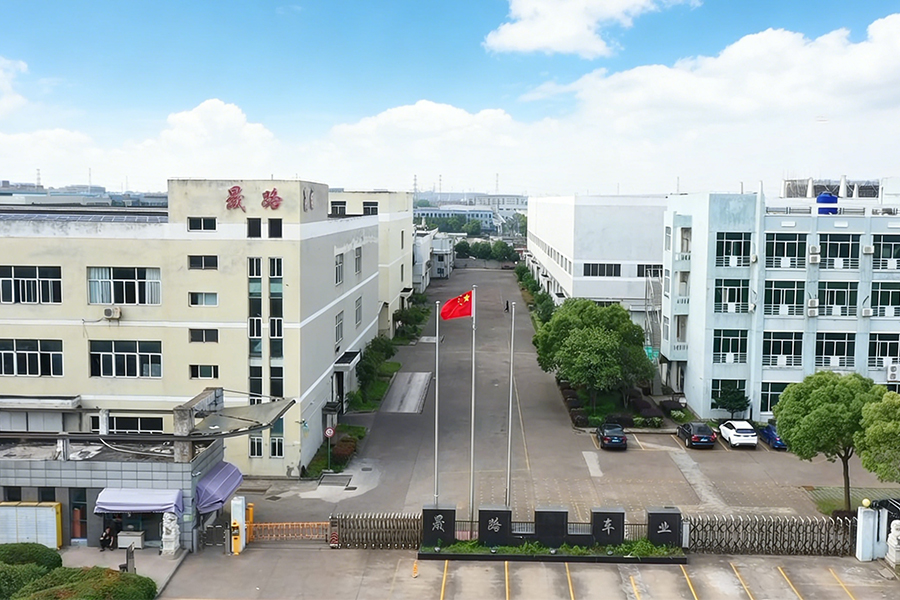
We produce hydraulic disc brakes within the same controlled manufacturing system as our hubs, freewheels and wheel components. Core processes, including aluminum forging, CNC machining, surface treatment, heat treatment and final assembly, are completed in our 80,000 m² Ningbo facility. This allows us to control batch consistency from raw material to finished brake.
- Dimensional and assembly accuracy inspection
- Functional performance verification
- Structural load and durability evaluation based on application
- Surface treatment consistency and corrosion resistance testing
Quality checks run through production, not only before shipment. Our OEM/ODM projects follow a defined path: manufacturing feasibility review, sample development aligned with mass production conditions, specification lock, then batch production with process consistency verification. Standard warranty is two years on manufacturing and material defects under normal use.
Our overall monthly supply capacity is 1.3 million components, and brake production is planned inside the same integrated production schedule as our hub and freewheel programs.
Configuration, Branding and Packaging
We support customization that can be controlled and scaled in production. The main options are:
- Piston count, system type and lever-seat style
- Pad material for noise, durability or heat targets
- Hose length and cable routing version
- Color, laser marking, logo and private-label branding
- OEM packaging and labeling for long-distance export
Rotor specification is coordinated separately through our Bike Disc Brake Rotor range, so the complete braking package is defined under one production plan.
Information We Use to Configure Your Solution
To prepare a hydraulic brake configuration and quotation, we need the following project inputs:
- Bicycle category and riding profile: MTB discipline, road, gravel, touring, urban or e-bike
- Wheel size, rotor size and brake mounting standard
- E-bike system details: motor type, controller, voltage and power-off requirement
- Lever preference: left/right, integrated or split handle seat, reach adjustment
- Brake performance target: two- or four-piston, modulation, heat resistance, pad material
- Color, logo, packaging, target volume and export destination
With these inputs we define the model, hose length, lever specification and rotor/pad pairing, then move to sample development before mass production.
Hydraulic Disc Brake OEM & ODM FAQs
What hydraulic brake models can we supply?
We supply eight model families including two-piston and four-piston calipers, open hydraulic systems, cable-pull oil-pressure actuation, and magnetic induction power-off e-bike brakes. Each model is available with specified lever, hose, pad and branding choices.
Can you make an e-bike power-off hydraulic brake?
Yes. EULA401 and EULA441 have magnetic induction power-off built into the brake system. To configure the connector and lever position we need the e-bike motor and controller details plus target voltage.
What is the difference between two-piston and four-piston?
Four-piston gives more braking power and heat capacity; two-piston is lighter and easier to modulate. We recommend four-piston for enduro, e-bike and high load, and two-piston for road, XC and urban use.
Can we customize colors, logos and packaging?
Yes. We offer color, laser marking, private labeling and OEM packaging, defined at sample stage and locked before batch production so large orders stay consistent.
How do you keep samples consistent with mass production?
We use process control, inspection checkpoints and batch traceability. Approved samples are made under mass production conditions, so scaling does not change the key process parameters that define brake feel and sealing quality.
What warranty applies?
Standard warranty is two years against manufacturing or material defects under normal use. Warranty is handled through problem confirmation, technical evaluation, and correction or replacement according to responsibility.



 English
 русский
 Français
 Español
 Português
 عربى